Top Sales Follow-Up Software for Startups 2026 | Nudge
Discover the best sales follow-up software for startups in 2026. Learn how AI-driven follow-through engines beat traditional CRMs for early-stage founders.
Top Sales Follow-Up Software for Early-Stage Startups 2026
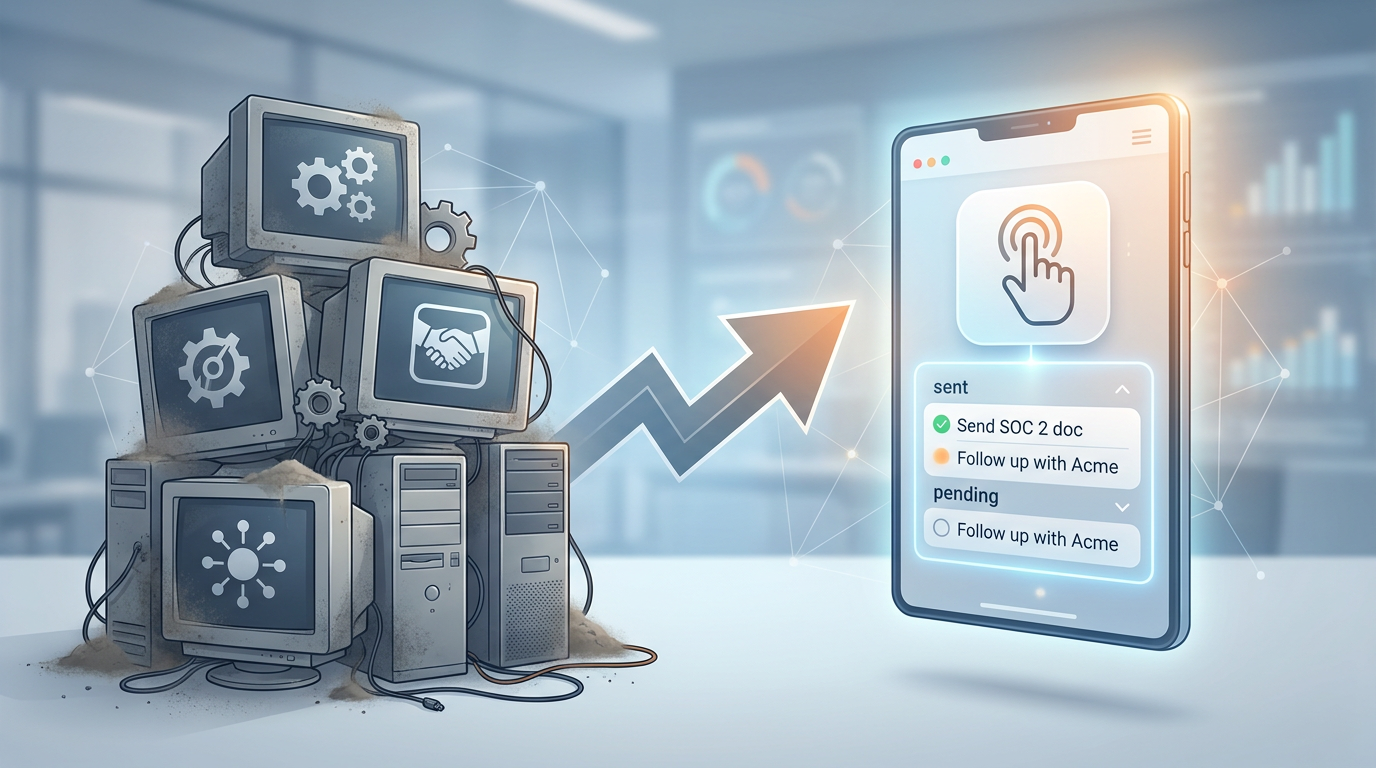
It is 2026, and the "Great CRM Exodus" is in full swing. For over a decade, early-stage founders were told that the first step to scaling revenue was to implement a heavy-duty CRM. They dutifully signed up for Salesforce, HubSpot, or Pipedrive, spent weeks configuring custom fields, and then—almost universally—stopped using them within three months.
The reality of founder-led sales in 2026 is that you don’t need a system for forecasting revenue to a board of directors; you need a system to ensure you don’t forget to send that revised SOC 2 document to the prospect at Acme Corp.
Statistics show that 70% of lost sales are attributed to a lack of follow-up, not a lack of product-market fit. In a market where 80% of deals require at least five follow-ups to close, yet 48% of representatives never follow up after the first call, the winner isn't necessarily the person with the best pitch—it’s the person who stays in the game the longest.
Why Traditional CRMs Fail Early-Stage Founders in 2026
The disconnect between traditional software and the needs of a founder stems from a fundamental misunderstanding of what "sales" looks like in the early stages.
The 'Dashboard Fatigue' Problem
Traditional CRMs were built for managers, not sellers. They are designed to aggregate data into "roll-up" dashboards for high-level oversight. For a founder, this is "busywork." Every minute spent updating a lead status from "Discovery" to "Qualified" is a minute not spent building the product or talking to customers. In 2026, founders are ditching these bloated systems because the upkeep cost—in time and mental energy—far outweighs the value of a visual chart.
Forecasting vs. Follow-Through
There is a massive distinction between forecasting tools and follow-through engines. Forecasting asks: *"How much money will we make in Q3?" Follow-through asks: "What did I promise Sarah during our Zoom call on Tuesday, and have I done it yet?"*
For an early-stage company, forecasting is often a guess. Follow-through, however, is the engine of survival. Founders need a system that captures commitments, not one that scores leads based on arbitrary percentages.
The Cost of the "Follow-Up Gap"
The data remains clear in 2026: only 2% of sales close on the first contact. To reach the closing stage, you must navigate the "silence gap"—that period between the initial "great call" and the signed contract. Most deals don't die because the prospect said "no"; they die because the founder didn't have a reliable system to bridge that silence.
Essential Features of Modern Sales Follow-Up Software
As we look at the landscape of sales follow up software for startups 2026, the priority list has evolved. We are moving away from manual entry and toward AI-driven action extraction.
1. AI Action Extraction
In the past, you would finish a call, open your CRM, and try to remember what to type. In 2026, the best software does the "thinking" for you. By importing transcripts from tools like Granola, Fireflies, or Google Meet, modern systems automatically extract next steps. If you said, "I'll send the pricing tier by Wednesday," the software recognizes that commitment and adds it to your calendar automatically.
2. Account-Based Living Pages
The static "Lead Profile" is dead. It has been replaced by the "Customer Page"—a single, living document that collapses every meeting transcript, email thread, and action item into one chronological view. This eliminates the need to click through multiple tabs to find notes from weeks ago.
3. Unified Task Lists over Visual Pipelines
While Kanban-style pipelines look nice, they don't always provide immediate direction. A unified task list, sorted by urgency and organized by account, is far more effective for founder-led sales. It identifies exactly who is waiting on you and who you are waiting on.
Eliminating the 'Silence Gap' with Nudge
Among the new breed of "follow-through engines" is Nudge. Nudge isn't a traditional CRM; it is a system built specifically for the founder who hates administrative overhead but needs discipline to close deals.
From Transcript to Action Plan in Seconds
Nudge solves the biggest friction point in sales: the administrative hangover after a meeting. You can paste a transcript or pull directly from your existing stack—Granola, Google Drive, Gmail, or Fireflies. Nudge then analyzes the conversation and builds an organized action plan by customer.
Auto-Built Customer Pages
Instead of a complex database, Nudge creates a dedicated page for every customer. Every commitment you made and every promise the prospect made is extracted and dated. It’s no longer your job to remember that you promised to follow up on the revised SOC 2 docs by Thursday; Nudge has already flagged it for you.
AI-Drafted Outreach
Efficiency in 2026 is about reducing the "activation energy" required to send an email. When a task is due, Nudge doesn't just remind you; it drafts the follow-up email based on the context of your last conversation. You review it, tweak a sentence, and hit send.
Top Alternatives: From Spreadsheets to Minimalist Tech 2026
If you aren't ready for a dedicated follow-through engine, what are the other options available this year?
The Spreadsheet Trap
Many founders start with Google Sheets. It's free and customizable, but spreadsheets are "dumb" records. They don't remind you of tasks, they don't ingest transcripts, and they quickly become a graveyard of outdated information once you have more than five active deals. If you spend more time formatting cells than talking to prospects, the spreadsheet is no longer serving its purpose.
Lightweight Note-Taking Integrations
Systems like Apple Notes or Notion are popular but lack "actionability." They are excellent for storage but poor for prompts. A note in Notion won't notify you on a Thursday morning to email a lead about a specific pricing tier.
System of Record vs. System of Action
When choosing your sales follow up software for startups 2026, ask yourself: *Is this a system of record or a system of action?*
System of Record (CRM): Stores data for historical purposes. Useful for 50+ person sales teams.
System of Action (Nudge): Drives your daily behavior. Essential for founders and small teams.
Implementing a Follow-Up Cadence That Actually Closes Deals
Success in sales is about a repeatable cadence. Here is how to set up a "Zero-Failure" workflow using 2026 technology.
The Post-Call Sync (5 Minutes): Immediately after a call, import your transcript into your follow-through engine. If you use Nudge, your first customer page is usually ready before your next call even starts.
Prioritize by Urgency: Work from a unified task list. Instead of checking five different customer folders, look at your "Due Today" list. Modern tools will sort these by account, allowing you to batch your tasks efficiently.
The 5+ Rule: Never close a task without scheduling the next one. If you send a case study today, your tool should prompt you to follow up in three days if you haven't heard back.
Leverage Your Context: When you follow up, avoid generic messages. Mention a specific detail from your last call—something the AI extraction captured—to build trust and show attentiveness.
Frequently Asked Questions
Q: Do I need a CRM if I’m just starting out?
A: Not necessarily. Most early-stage founders need a follow-through engine rather than a full CRM. If you have fewer than 50 active leads, a system that focuses on actions and tasks like Nudge is typically more effective.
Q: What is the best sales follow up software for startups in 2026?
A: The "best" software is the one you actually use. For founders who find traditional CRMs too bulky, Nudge is a leading choice because it automates note-taking, task extraction, and email drafting.
Q: How does AI action extraction work?
A: Using Large Language Models (LLMs), tools like Nudge read through your meeting transcripts. They identify "commitment phrases" and automatically convert them into dated tasks in your to-do list.
Q: Can I use Nudge alongside other tools?
A: Yes. Nudge is designed to work with your existing stack, such as Google Drive, Gmail, Fireflies, and Granola, making your notes functional.
Q: What if I already have a CRM?
A: Many founders use Nudge as their personal "action layer" while keeping a CRM as a backup for the company. Nudge handles the daily follow-through that keeps deals moving.
Conclusion
In 2026, the competitive advantage for a startup isn't just the code—it’s the follow-through. By moving away from the "bloat and busywork" of 2020-era CRMs and embracing lean, AI-powered follow-through engines, founders can ensure that no deal ever dies in the silence again.
Start your five-minute setup today. Your first customer page is ready before your next call ends. Try Nudge for free and see why it’s the top choice for founders who want to close more deals with less friction.